

While most IT teams keep the focus on larger hardware, the real risk lies in irresponsible disposal of fast tech. Smaller devices such as earbuds, adapters, chargers, and other low-cost IoT devices are small but pose a major risk. Small doesn’t mean safe. Smaller items still contain lithium-ion batteries that cause numerous chemical fires in trash and recycling streams. Though these devices hold little recovery value on their own, they can produce modest material recovery value at volume. This year’s International E-Waste Day theme is fast tech and how these low-cost, battery-embedded accessories present a growing e-waste problem. Today, we break down where the risk hides, how to reduce safety risks through compliance, and how to extract value from these small devices.
The Hidden Fire Risk in Small Tech
Last year, 448 lithium-ion and battery-related fires were publicly reported across the U.S. and Canada, up from the previous year and nearly 25 percent above the historical annual average of 360. The disposable mindset drives e-waste accumulation among these fast tech devices. Because they don’t operate like larger devices, people view them differently and throw them away with little thought. Many of these small devices still contain lithium-ion batteries, which are extremely hazardous and notorious for exploding when damaged. Many battery-related fires are linked to small, fast tech devices that were carelessly thrown away.
Electronics are also manufactured with metals that leak harmful chemicals. This means that when fast tech is thrown away, it ends up in landfills, where these chemicals can soak into the soil and pollute water. Battery fires can take days, sometimes weeks, to fully extinguish and cost thousands, sometimes millions, in damage control.
These items often bypass standard corporate procurement because they are so small and frequently slip through the cracks as “ghost e-waste.” Even the smallest earbuds contain batteries and can cause large-scale chemical fires. Tech is tech, and small doesn’t always mean safe. Fast-tech electronics still require proper disposal to mitigate environmental liability.
Safety Through Legislative and Regulatory Compliance
Fast tech is small and often an invisible threat, but you can combat the risks. Compliance is paramount in the ITAD space, and state disposal bans and battery stewardship laws apply to small, fast-tech devices. So far, 23 U.S. states, including California, Massachusetts, Vermont, and Wisconsin, and the District of Columbia have banned various electronic devices from landfills. Most of these bans cover battery-containing devices of all sizes. At the same time, many other states regulate e-waste through manufacturer take-back laws or restrictions on specific components, such as lithium-ion batteries or CRTs.
Battery stewardship laws are also moving rapidly across the U.S., working toward a regulatory framework known as “Extended Producer Responsibility” (EPR). EPR shifts responsibility for proper disposal from consumers and city trash programs to manufacturers and brands. This also shifts blame from disposal vendors to companies when mistakes happen, such as small devices slipping through compliance gaps.
ITAD compliance is a key component of risk management. Certifications like R2v3, RIOS, and NAID AAA help ensure vendors process all equipment in full compliance with applicable laws. Responsibility is shifting, which means their failure is your failure. Companies should implement a strict screening process to make sure their downstream vendors are fully vetted. Certifications require serialized tracking and proof of erasure to ensure all devices are managed and data is wiped. Using certified ITAD vendors helps maintain industry standards, ensures compliance at every level, and helps prevent fast tech from becoming an invisible threat.
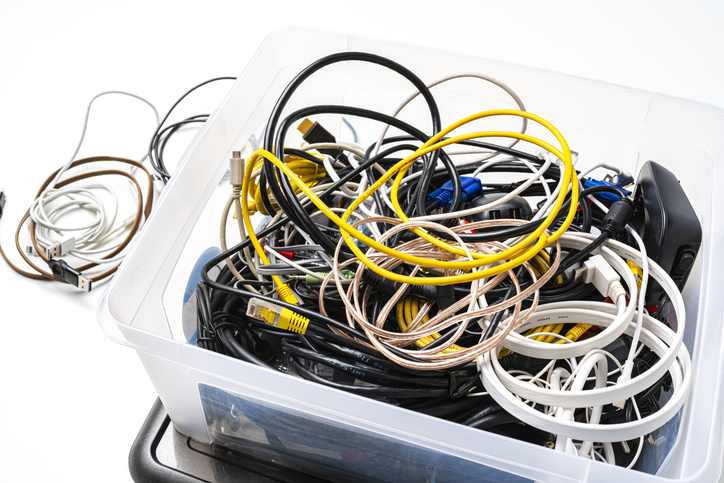
Turn Risk into Revenue with Modest Materials Recovery at Volume
Fast tech is designed to be low-cost and disposable. Consider how many chargers, adapters, and earbuds consumers and companies go through each year. On their own, each device holds almost no value, but that is where volume becomes necessary. The sheer amount of fast tech manufactured, released, and processed is often viewed as a problem because most of it becomes e-waste and contributes to global generation. However, each of these devices still contains small amounts of metals. Power adapters contain copper, aluminum, steel, tin, and silver, all of which can be recovered and reused.
Mining new metals and materials to manufacture new electronics requires large amounts of energy and resources. Materials recovery reduces demand for raw materials by using materials already in circulation. This reduces the overall carbon output of electronics manufacturing. When consumers and enterprises throw these fast-tech devices into the trash instead of recycling them, they lose valuable, finite materials and send toxic chemicals to landfills. In small batches, it’s not much, but at volume, processors can recover modest material value and increase enterprise ROI.
Reduce Fast Tech Risks with Certified Disposal
Small doesn’t mean useless or even harmless when it comes to e-waste. ITAD providers offer a range of services for end-of-life assets, even low-cost battery-embedded miscellaneous tech.
Certified data erasure – An ITAD provider ensures all devices undergo a rigorous data erasure process so no data remains on the device during processing. Serialized tracking enables quick, easy identification of each asset throughout the process, ensuring no devices are overlooked.
Device repair and refurbishment – Any devices still in working order that have undergone data erasure are repaired and refurbished for reuse.
Reuse over recycling – ITAD providers prioritize the reuse hierarchy and use recycling only as a last resort. This extends the device lifecycle and reduces demand for new devices.
Materials recovery – Fast tech often has little to no resale value, but still contains important metals and other materials that can be reused. ITAD providers offer materials recovery to maximize value, even in the smallest devices.
Fast tech is real e-waste, and it’s hiding in plain sight. Contact HOBI to request a free fast tech evaluation at 877-814-2620 or sales@hobi.com.